.png)





Choosing a Branding Agency for Your D2C Brand
Choosing a branding agency is one of the highest-stakes decisions a D2C founder makes. Get it right, and you walk into every retailer meeting, investor pitch, and product launch with a brand that earns trust on sight. Get it wrong, and you lose months and end up rebuilding the same brand from scratch anyway.
A branding agency for a D2C brand is not just a design vendor. They are the team that translates what your product is into what shoppers feel on a shelf, on a Blinkit listing, and on a scroll through Instagram. Here is exactly how to choose the right one, whether you're building a skincare, food, or wellness brand.
Why Most D2C Founders Pick the Wrong Agency
The most common mistake is choosing an agency based on aesthetics alone. Founders see a beautiful portfolio, feel a vibe, and sign. Then the project stalls because the agency doesn't understand FSSAI labelling rules (the food safety authority's mandatory rules for what must appear on a food or supplement label in India), or the packaging looks great on screen but fails in print.
India's D2C market is valued at over $80 billion and growing fast. According to Inc42 research, a large share of Indian D2C brands stay stuck at an early revenue stage, often because their branding holds them back at the retail stage, and poor agency selection is a primary reason for that gap.
The right agency doesn't just make you look good. It makes you commercially competitive.
6 Things to Check Before You Choose a Branding Agency
1. Portfolio Fit: Have They Worked in Your Category?
A branding agency that builds beautiful hotel identities is not the same as one that understands FMCG shelf dynamics. Before anything else, check whether they have case studies in your category, whether their packaging work looks conversion-ready rather than just award-ready, and whether they've executed multilingual packaging, FSSAI-compliant labels, or retail-format variations before.
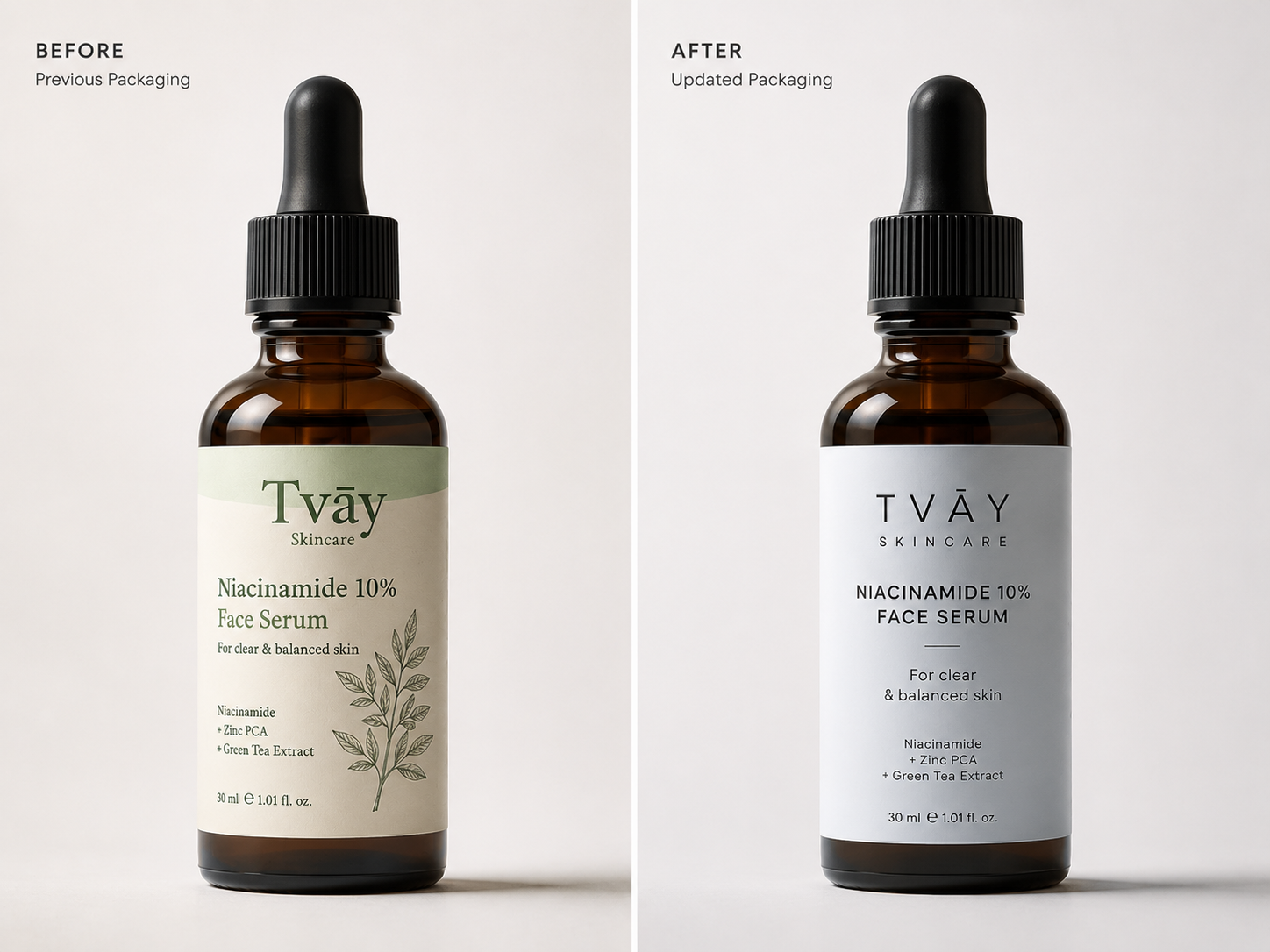
What good looks like: Mamaearth's visual evolution over the past few years tells a clear strategic story. Its early product variants leaned on natural green-and-cream cues shared by every competitor, then shifted toward a cleaner, clinical-adjacent aesthetic with tighter typography and a cooler palette as the category matured. That shift happened because someone understood category positioning, not just design trends, so look for an agency that can explain the "why" behind their past work, not just show you what it looks like.
2. Process Clarity: Do They Have a Structure?
A credible agency runs a defined engagement and can tell you, in clear terms, what happens in week one, week three, and week six. Ask what their brand discovery process involves, how many revision rounds are included, and what deliverables you'll receive at the end.
If the answer is vague, something like "we do a deep dive and then present options," keep asking. A vague process usually means a vague outcome, and it's worth pushing for specifics before you sign anything.
3. Commercial Understanding: Do They Think Beyond Pretty?
Your packaging has to work in at least three environments: a small thumbnail on a quick commerce app, a modern trade shelf (the organised retail format used by supermarkets and chain stores, as opposed to a traditional kirana shop) at eye level, and an Instagram scroll between two reels. An agency that only designs for large screens will often deliver packaging that fails at thumbnail scale or in print.
MCaffeine's packaging demonstrates category-defining commercial thinking, since its neon single-ingredient hero format works at thumbnail scale, at shelf scale, and in every ad format the brand runs. Every product variant tells the same visual story in the same language, which matters because when a brand has ten variants that each look like a different studio made them, shoppers stop trusting the product before they even read the label.
4. Speed and Communication: Will They Move at Startup Speed?
Large agencies often take long retainers and assign junior designers to your project after the pitch, while freelancers can disappear after the first payment. A studio built for D2C founders tends to sit between the two, offering senior creative attention with startup timelines and direct feedback loops.
Ask for a typical project timeline. If a full branding engagement, meaning a logo, an identity system, and packaging for a couple of variants, is quoted at four to six months, that studio is likely calibrated for enterprise clients rather than founders who need to move fast.
5. D2C-Specific Experience: Do They Understand Your Channels?
A studio that understands D2C knows your brand has to work simultaneously across quick commerce apps like Blinkit, Zepto, and Swiggy Instamart, which need thumbnail-scale legibility, Amazon India and Nykaa listings, where the main image has to carry the product story alone, modern trade retail shelves, and your own D2C website.
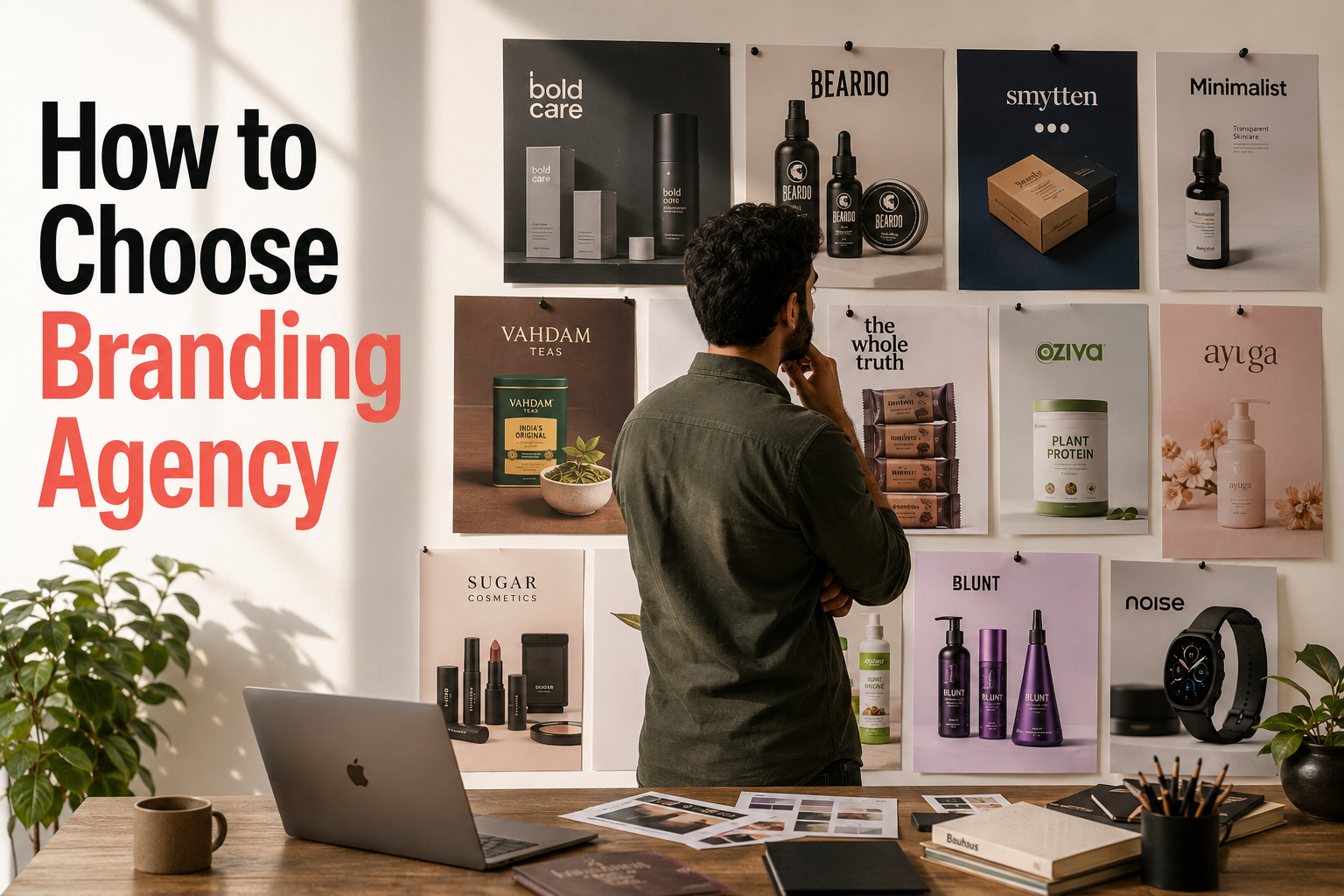
Food example: The Whole Truth: every label lists every ingredient in plain English, with no marketing language layered on top. That radical transparency works because it was designed with the online D2C customer in mind first, someone reading the label with time and intent, rather than a shopper hurrying through a physical store aisle. The agency that designed it understood the channel before it designed the label.
Wellness example: OZiva: OZiva built its packaging system around clear, science-forward claims that hold up equally well on a cluttered Amazon India search page and on a clean D2C product page, since its core customer researches heavily online before buying a supplement. An agency without D2C experience often designs for one of these contexts and quietly breaks in the other.
6. References and Real Outcomes: What Actually Happened After the Rebrand?
Ask for founder references, not just client logos. Specifically ask what changed in the business after the rebrand, since a credible studio can point to outcomes like a retail buyer converting, a return on ad spend (ROAS, meaning the revenue generated per rupee of ad spend) improvement, or a product launch that sold out.
If the agency can only talk about awards and aesthetics, they're likely optimising for their own portfolio rather than your growth. Push past the visuals and ask for the business result behind each project they show you.
Freelancer vs. Boutique Studio vs. Full Agency: Which Is Right for You?
| Freelancer | Boutique Studio | Full Agency | |
|---|---|---|---|
| Cost (INR) | INR 30K–INR 2L | INR 2L–INR 12L | INR 15L–INR 50L+ |
| Speed | Fast, but inconsistent | Fast and structured | Slow (enterprise timelines) |
| Strategic thinking | Execution-only | Design + strategy | Strategy-heavy, design delegated |
| D2C experience | Rare | Specialist studios exist | Usually FMCG/mass market |
| Execution depth | Logo only or single deliverable | Full brand system + packaging | Full brand system, may not do dielines |
| Right for | One-off assets, tight budget | Seed to Series A rebrand | Series B+ with dedicated brand team |
A dieline, mentioned in the table above, is the flat, print-ready technical drawing that shows exactly how packaging artwork folds, cuts, and wraps around a physical product. For most Indian D2C founders in the early-to-growth revenue range, a boutique studio with D2C focus tends to be the right answer, since it offers strategic input, full execution, and startup speed in one place.
How Much Does Branding Cost for an Indian D2C Brand?
Rather than quoting fixed rupee figures that go stale fast and vary enormously by scope, it's more useful to think in terms of tier, matched to what stage your brand is at.
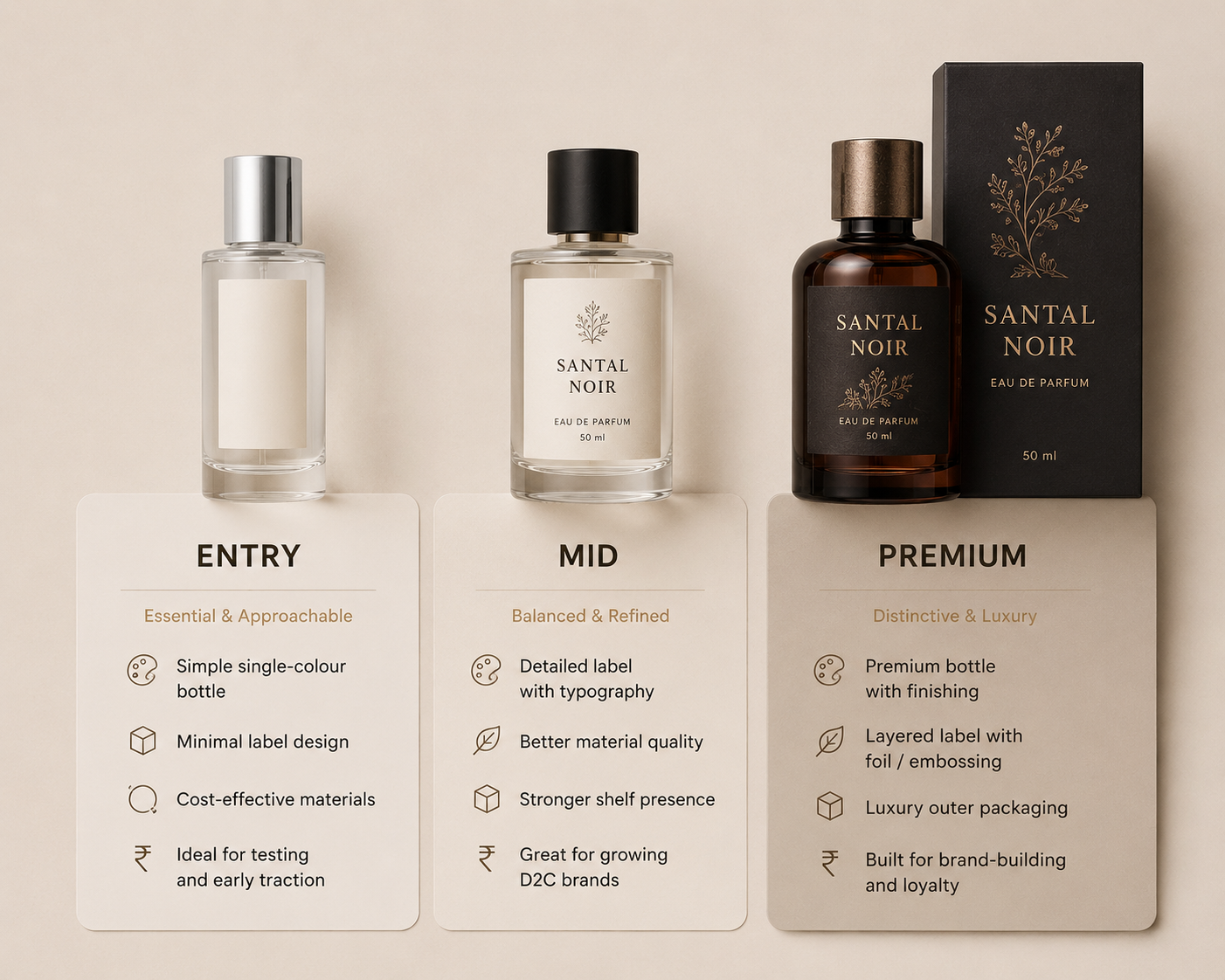
- Entry tier (logo and basic brand identity): a lightweight package, useful for very early validation, with limited customisation and a small number of revision rounds.
- Mid tier (full brand identity system, or packaging design for one to two SKUs): a proper system covering typography, colour, layout rules, and brand guidelines, or print-ready, dieline-ready packaging for a small initial range.
- Premium tier (full brand plus packaging engagement, four or more SKUs, plus a digital brand kit): the most complete option, designed to hold together across a growing product range and multiple retail and ecommerce channels at once.
- Website design (Webflow, D2C-optimised): typically scoped separately from brand and packaging work, and priced based on page count and ecommerce functionality.
Be cautious of any studio quoting an unusually low price for a full brand identity system. At that price point, you're often getting templates rather than a real system, and a brand that doesn't hold together across a growing SKU range and multiple channels tends to cost far more later in rework and lost retail opportunities.
Before you request quotes, it helps to have a clear view of what you actually need. Our guide to the branding mistakes D2C startups make is a useful gut check before that first agency call, since it flags the gaps a good agency should be catching for you.
Jellypop Design is a branding and packaging studio built specifically for Indian D2C founders. We work with brands at the early to growth stage who need their brand to stop looking like a startup and start looking like the category leader.
We handle brand identity, packaging design (primary and secondary, print-ready, FSSAI-compliant), and D2C website design on Webflow, in one engagement, without long retainers or junior designers. To see how these principles play out at the packaging level itself, our guide to how packaging impacts ecommerce conversions is a good next read, or you can browse our case studies directly.
The right agency isn't the one with the flashiest portfolio. It's the one whose past work reflects genuine positioning decisions for brands like yours, not just a different coat of trendy paint.