
.png)





Difference Between Branding and Packaging: What Every Indian D2C Founder Needs to Understand
Many D2C founders spend months and a sizeable budget on "branding," only to end up with a logo and one nice-looking label, and no idea how to make their next five SKUs look like they belong to the same brand. The shelf section starts to look like four different companies. The Instagram grid doesn't match the packaging. A new variant launches and nobody is sure what colour it should be.
This usually comes down to one root issue: branding and packaging are being treated as the same thing, when they're not.
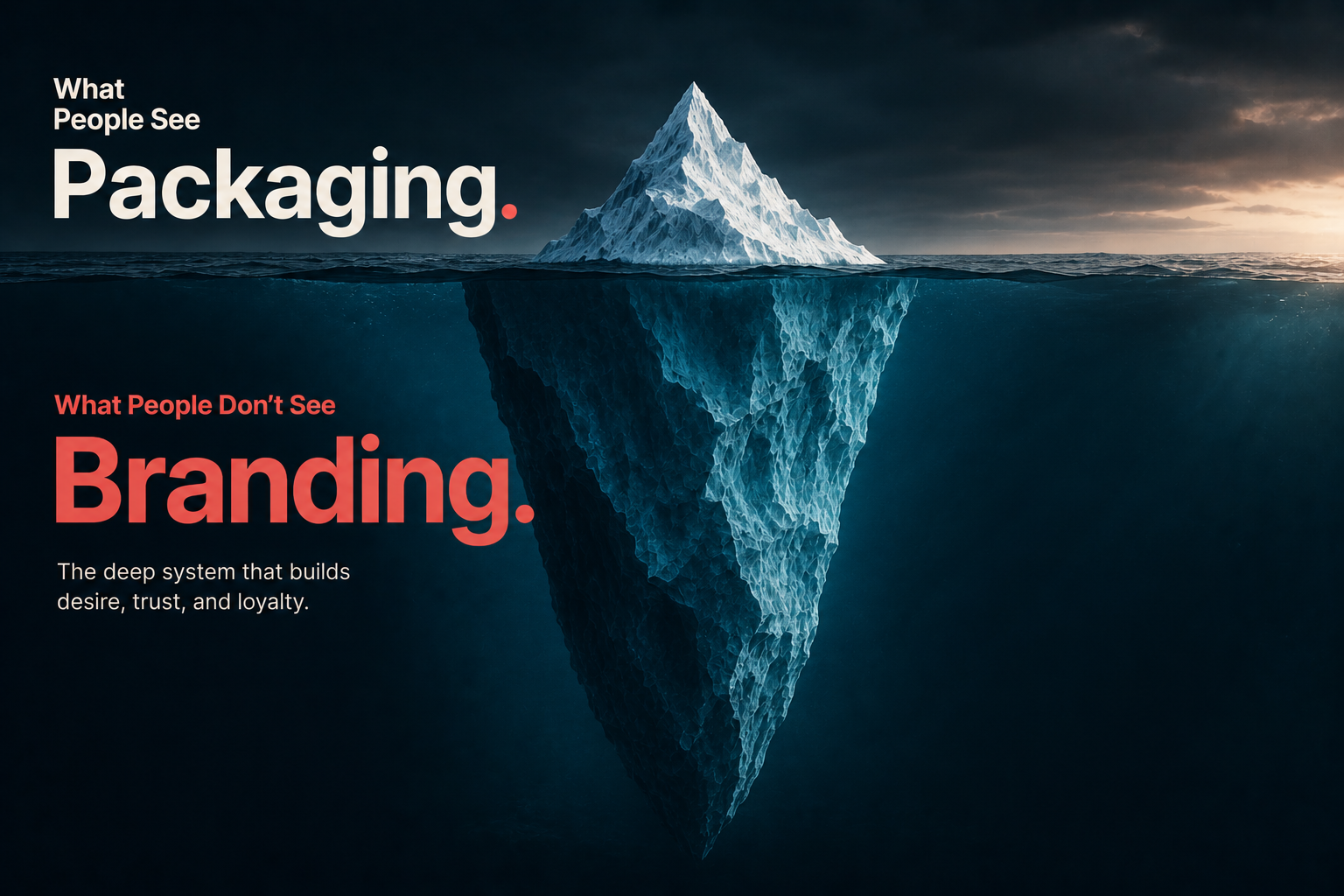
The difference between branding and packaging is this. Branding is the complete identity system that defines who you are. Packaging is the physical or digital surface where that identity shows up on your product. Confusing the two leads to one of two outcomes, neither of which is cheap to fix later. Either you end up with packaging that has no system behind it, so every new SKU looks slightly different, or you end up with a polished brand identity that never gets properly applied to the product itself.
Here's how to think about both, why each matters on its own, and how they work together for Indian D2C brands.
What Is Branding?
Branding is the full visual and verbal identity system that defines how your brand looks, sounds, and feels across every touchpoint.
It includes a few core pieces. Your logo and the rules for using it, covering things like spacing and what it can sit on. Your colour palette, with exact Pantone, HEX, and CMYK codes for primary and secondary colours. Your typography system, meaning the headline and body fonts and how they work together. Your illustration or photography style, if you use one. Your brand voice, covering tone and vocabulary in everything you write. And a brand guidelines document that ties all of this together for anyone working on the brand.
Branding answers one question: who is this brand, and why should I trust it? It's the system that sits behind every product, every social post, every label, and every shelf presence.
MCaffeine is a good example of a brand with a clear system behind it. Neon backgrounds, bold sans-serif type, single-ingredient naming, and a youthful tone of voice: these are brand-level decisions. Packaging then applies these rules consistently, from the product label to the Instagram grid to the Amazon storefront.
What Is Packaging?
Packaging is the physical or digital surface that presents your product to the consumer. It's where your brand identity meets the real world.
It includes your primary packaging: the bottle, pouch, box, or wrapper that holds the product directly. Your secondary packaging, like the outer box, carton, or mailer. Your label design, covering both the information hierarchy and regulatory content such as FSSAI declarations, ingredient lists, and batch codes. Your production files (often called dielines), which are the technical specifications a printer or manufacturer needs. How your packaging adapts across different SKUs, sizes, and product lines. And your digital product photography for Amazon, BigBasket, Nykaa, and Blinkit.
Packaging answers a different question: why should I pick this product up right now? It's the conversion tool: it takes the brand identity and puts it on a surface a shopper actually encounters, whether that's a shelf, a listing thumbnail, or an unboxing moment.
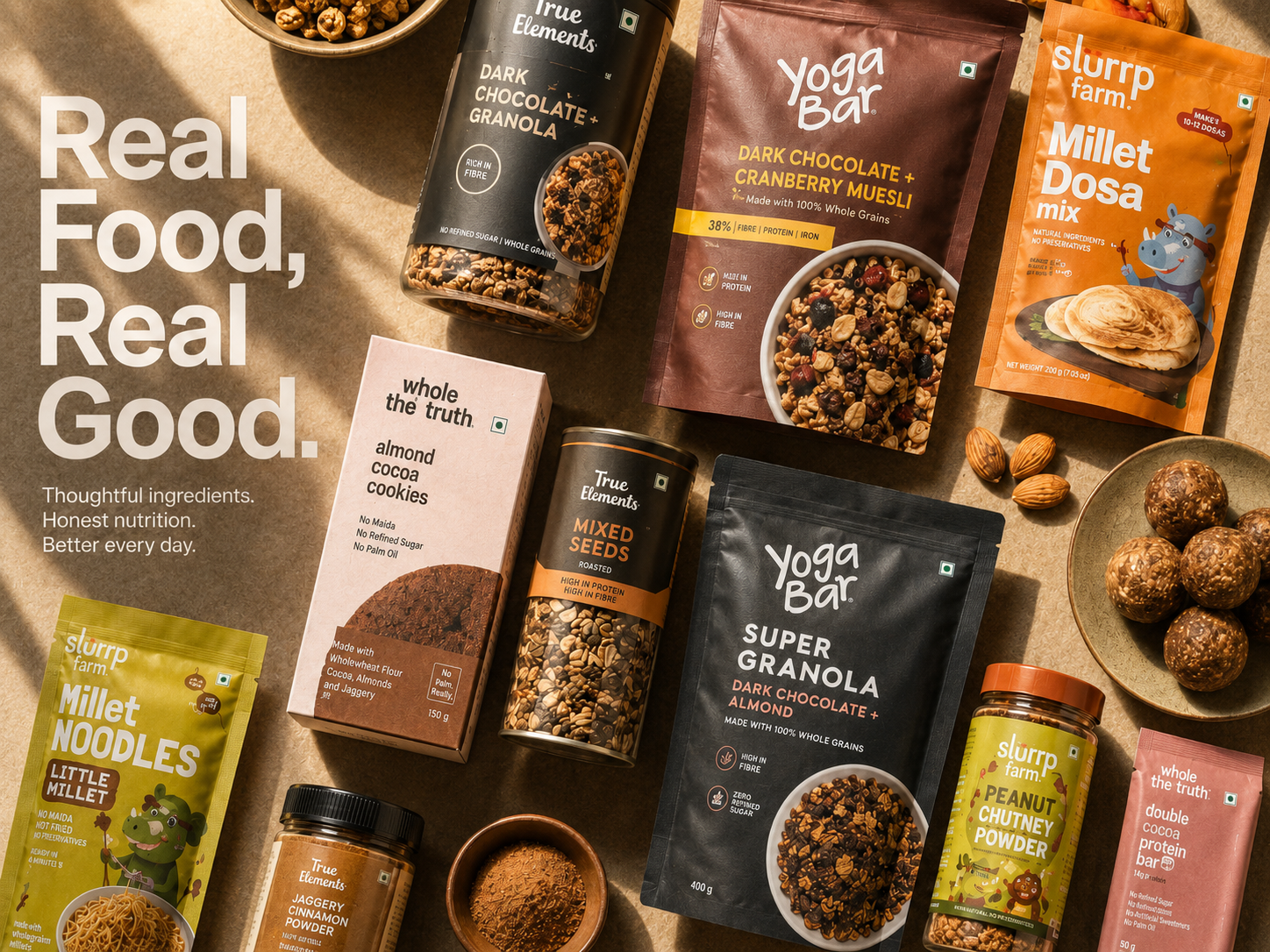
The Whole Truth is a good example of packaging being used to prove a brand idea, not just present it. Their full ingredient list, shown in plain English with no decoration or lifestyle photography, is a direct execution of the brand's "nothing to hide" position. There's no marketing copy doing the convincing: the packaging itself makes the case.
Branding vs Packaging: The Key Differences at a Glance
Why D2C Brands Confuse Branding and Packaging
This mix-up tends to happen for a few reasons.
Both involve hiring a designer. When a founder asks someone to "do the branding," they often get a packaging label back instead. The two need different briefs and different deliverables, and sometimes different specialists altogether.
Both look like finished design work. A packaging label looks designed. A brand guidelines document also looks designed. But one is a rulebook, and the other is one application of that rulebook. When the two get confused, the brand ends up with no repeatable logic behind its design choices.
Most Indian D2C brands launch packaging before they have a brand system. A freelancer puts together a quick logo and label, the brand launches, and then a second SKU needs a label with no rules to follow. Each new product ends up looking a little different, and the shelf section starts to resemble a category of unrelated products rather than one brand.
This is a common pattern across the category: some Indian skincare and personal care brands have visibly gone through a visual refresh over the years, moving from inconsistent early SKU lines to a more unified look across their range. The general lesson holds either way: packaging inconsistency is usually a symptom, and the underlying cause is a missing or unclear brand system.
How Branding and Packaging Work Together
When the two are aligned, each one makes the other stronger.
The brand identity sets the rules: colour palette, typography, illustration style, voice, all decided at the brand level. Packaging then applies those rules to the product surface, so a label designer is working within an existing system rather than inventing a new look for every SKU. The result is that every product variant looks like the same brand, whether someone's viewing it from three metres away on a shelf or as a small thumbnail on Blinkit.
As the brand grows, this system scales with it. New SKUs, variants, and formats all get designed against the same rulebook, which avoids visual drift and the need for expensive redesigns down the line.
Some larger Indian D2C brands illustrate this well. A brand that rebuilds its visual system with a clear typographic hierarchy, defined colour logic, and consistent label structure across categories can end up with a full shelf section where every product is instantly recognisable as part of the same range: both at arm's length on a shelf and as a small image on an ecommerce listing. That kind of outcome generally isn't possible without branding and packaging working as one connected system.
Four Mistakes D2C Founders Make When Treating Branding and Packaging as the Same Thing
Mistake 1: Building packaging before building the brand system.
The first SKU looks fine. The second looks slightly different. By the fifth, the shelf section reads as a category, not a brand.
Mistake 2: Redesigning packaging to fix a brand problem.
If the underlying issue is the brand's positioning, personality, or colour territory, a new label won't solve it. The brand system needs to change first, and packaging follows from there.
Mistake 3: Treating a logo as a full brand system.
A logo is just one piece of an identity system. Without colour rules, typography rules, and layout principles to go with it, the logo ends up applied differently across packaging, social media, and retail: and consistency becomes very hard to achieve.
Mistake 4: Treating FSSAI compliance as a packaging afterthought rather than a brand decision.FSSAI declarations, ingredient lists, net weight, and batch codes are fixed requirements. A brand system should account for these in its layout principles from the start, rather than fitting them onto a label that wasn't designed with them in mind. Brands that plan for this build compliance into the label grid from day one. Brands that don't often end up with cluttered labels that cause problems later, including at the retail buyer stage.
What to Brief Your Designer: Branding vs Packaging
Getting the order right matters because packaging built without a brand system behind it is a one-time piece of work: it solves today's label, but gives the next designer nothing to work from. Packaging built against a brand system, on the other hand, becomes a template that scales cleanly as the range grows.
If you're starting from scratch or rebuilding an existing brand, brief these two pieces separately, and in this order.
Brief 1: Brand Identity System (do this first)
Brand name, positioning statement, and the one thing your brand should be known for
- Your category, competitors, and the visual space you want to claim
- Who you're selling to, and what they need to feel when they see your brand
- Deliverables to expect: logo suite, colour palette with codes, typography system, usage rules, and a brand guidelines document
Brief 2: Packaging Design (do this after the brand system is defined)
- Product name, format, and primary packaging type: bottle, pouch, box, or tube
- Regulatory requirements: FSSAI declarations, legal metrology, ingredient list format
- Your SKU range, and how the variants should relate to each other visually
- Where the product will be sold: modern trade, quick commerce, D2C website, or all three
- Deliverables to expect: print-ready label files, production-ready dielines, and ecommerce product images
Where to Go From Here
If your packaging already looks inconsistent across SKUs, or you're about to brief a designer for a new product line, the most useful first step is usually an honest audit of whether you actually have a brand system, or just a logo and a label.
Jellypop builds brand identity systems and packaging design for Indian D2C brands, in that order, for retail, ecommerce, and quick commerce from the first brief. If you're not sure whether you need branding, packaging, or both, that's exactly the kind of question worth starting with. [See our packaging work →] or [explore brand identity →]
.png)